
Natural ageing
Vocal characteristics can change gradually over years. A voiceprint that stays fixed may become less representative of the person who enrolled.
Voice biometrics · Pre-MVP development
Secure Voiceprint Lifecycle Management for Long-Term Voice Authentication.
VoxSecure is developing a technology layer that helps existing voice biometric systems decide whether a verified sample should update a customer’s stored voiceprint.



The problem
A voiceprint represents a speaker at a point in time. Deciding when to update it matters as much as recognising the caller.
Vocal characteristics can change gradually over years. A voiceprint that stays fixed may become less representative of the person who enrolled.
Illness, emotional state, a different microphone or telephone-channel conditions can change how a caller sounds in a single session.
Replayed or synthetic speech can challenge verification. If unsuitable samples are accepted for adaptation, they may compromise the stored template over time.
Successful voice authentication does not automatically mean that a voiceprint update is safe.
In the VoxKnesset benchmark, the best evaluated model’s speaker-verification equal error rate increased from 2.15% to 4.58% across a roughly 15-year gap. The result applies to that study’s data and evaluation setup. Marmor et al., 2026
The VoxSecure solution
VoxSecure is designed to complement the host biometric engine with a separate decision about long-term voiceprint updates.
Existing biometric engine
The host verifies the speaker and applies its own authentication and anti-spoofing policies.
VoxSecure · Proposed layer
The proposed layer evaluates whether the sample belongs in the long-term profile.
Core technology
The proposed architecture links four components. The trajectory model and decision thresholds still require development and testing.
We plan to examine how a candidate speaker embedding relates to the trusted enrolment reference, the approved voiceprint history, elapsed time and security signals supplied by the host biometric engine.
Keep the original trusted reference separate from adaptive versions. The anchor provides a stable point of comparison as the active profile changes.
Give each approved change its own version. The proposed design records the update history so authorised operators can trace a change and restore an earlier trusted version.
Return an update decision with a reason code. The proposed audit trail records why an update was accepted, deferred or rejected.
How VoxSecure works
Proposed flow for integration through an API or SDK with vendor-specific adapters.
The customer calls their bank or contact centre.
The existing engine verifies the speaker and performs anti-spoofing checks.
The API or SDK receives a candidate speaker embedding and relevant confidence and security signals.
The proposed gate assesses the candidate against the reference, history and available evidence.
The layer returns ALLOW, HOLD or BLOCK with a reason code.
Only approved updates create a new version. The original anchor remains protected.
Decision scenarios
Illustrative scenarios — not completed product tests.
Allow update
A caller’s voice has changed gradually. If the change fits the approved history and the security evidence supports the update, the proposed system can create a new version.
Hold update
A legitimate caller sounds different during an illness or a poor-quality call. The host may still authenticate them under its policy. The voiceprint stays unchanged.
Block update
If the available evidence makes the proposed update suspicious or a required security check fails, the layer is designed to reject the update and log the reason.
Security research
VoxSecure is at the pre-MVP stage. These research questions and evaluation activities define the work ahead.
Scientific foundation
Mohammadreza Shirkhan holds an MSc in Electrical Engineering, specialising in Communication Systems.
Explore Previous Research CodeHis work explored auditory attention modelling, harmonic and spectro-temporal speech representations, feature reduction, clustering and multi-speaker speech separation. It included MATLAB implementation, experiments and documented audio reconstruction results.
The prior work evaluated speech processing and separation. It provides a foundation for investigating speaker-specific acoustic features and their stability over time. Longitudinal authentication and the security of adaptive voiceprint updates are new research objectives.
Technology and research data
We are investigating ECAPA-TDNN speaker embeddings and WavLM speaker representations. Model selection, dataset access, licensing and the final evaluation protocol remain open.
Longitudinal Hebrew speech under consideration for benchmarking across recording gaps.
Longitudinal English and Mandarin speech. Any use depends on access and appropriate licensing.
Dutch speech including older speakers. A candidate for evaluation across speaker groups, with no longitudinal ageing design.
We plan to minimise biometric data exposure by evaluating workflows that exchange embeddings in place of raw audio. GDPR considerations include access controls, retention, deletion and deployment-specific impact assessment. EU-hosted and on-premises deployment are options under consideration.
Applications and integration
VoxSecure is proposed as a B2B integration layer. We plan to evaluate safer adaptation, traceable update decisions and whether better update governance can reduce unnecessary re-enrolment.
Explore adding a layer that governs voiceprint updates through vendor adapters and an API or SDK.
Assess whether version history and reason-coded decisions can help teams review updates and restore trusted profiles.
Evaluate how the proposed layer fits existing call flows, telephony and operational policies.
Founders and leadership
Both founders are operationally involved and are applicants for the Dutch Startup Visa. Mohammadreza leads technical research and development. Laleh leads the financial, commercial and operational work needed to bring the technology to partners.
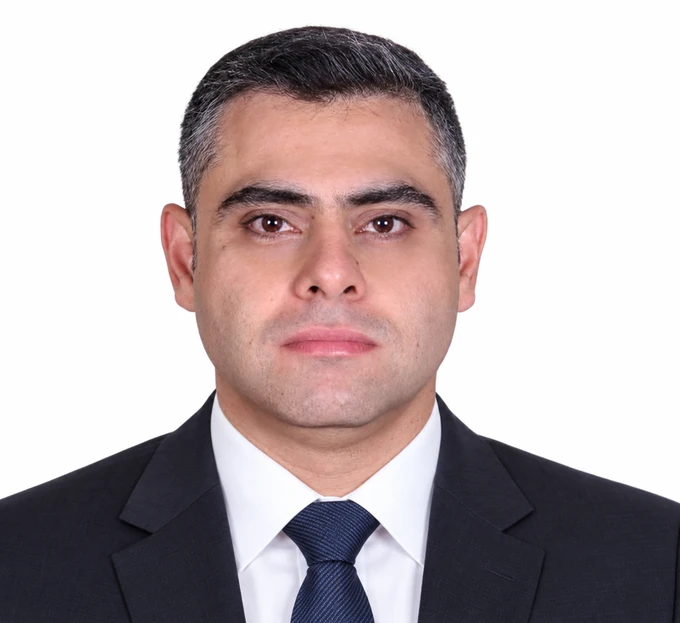
More than 20 years in engineering, technical management, R&D and project execution. At VoxSecure, he leads technical research, architecture, algorithm development, security evaluation and integration.
Former After-Sales Service Manager at GREEN Warranty, with R&D experience at GREEN Planet Pardis. His academic background covers Electrical/Electronics Engineering and Communication Systems, with research in digital signal processing, speech analysis, harmonic features, clustering and speaker separation. He has also worked on technical projects, business initiatives and business-model development.

15 years in finance and accounting. At VoxSecure, she leads business planning, financial management, market research, partnerships and operations.
Five years in financial management, ten in accounting and two in marketing. She holds an MSc in Applied Sustainability Management from SRH Haarlem, Netherlands, a master’s degree in Economic Sciences from Tehran, Iran, and a BSc in Industrial Economics from Firuzkuh, Iran.
Collaboration and contact
We welcome academic researchers, voice biometrics and cybersecurity experts, technology providers, banks and contact centres for research discussions and potential integration or evaluation work.